





Introduction
In an increasingly digital and connected world, customer service has shifted from being a reactive function to becoming a core driver of brand reputation and long-term customer loyalty. Businesses are now operating in a world where customers expect effortless, personalized, and intelligent interactions at every touchpoint.
These days represent a defining moment in the evolution of customer engagement, powered by advancements in automation, data analytics, and AI-driven omnichannel capabilities. Dynamics 365 Customer Service, Microsoft’s unified platform built to help support teams deliver faster resolutions, anticipate customer needs, and create meaningful, data-informed experiences, is leading this transformation.
The guide provides general information really worth knowing, from the module’s key features and benefits for business to AI insights that shape the present and future of customer service.
What is Dynamics 365 Customer Service?
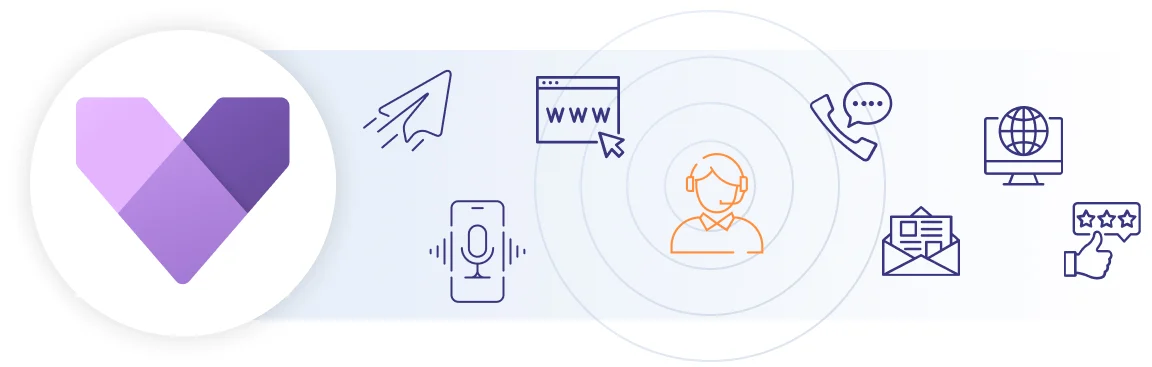
Dynamics 365 Customer Service is Microsoft’s dedicated solution for delivering exceptional support experiences across channels, designed to help companies resolve issues efficiently while building long-term customer loyalty. At its core, it provides a unified platform for case management, knowledge sharing, and agent productivity, empowering service teams with real-time insights and intelligent tools. As part of the broader Dynamics 365 suite, it integrates seamlessly with other modules like Dynamics 365 Sales and Marketing, creating a connected ecosystem where customer interactions flow smoothly from acquisition to retention.
While Sales focuses on lead nurturing and deal closure, and Marketing drives engagement and campaigns, Customer Service ensures that post-sale support is proactive, personalized, and scalable, making it a critical component of the end-to-end customer journey.
The Key Features in 2025
In 2025, Dynamics 365 Customer Service delivers a robust suite of features designed to elevate support operations and customer satisfaction.
-
Omnichannel engagement
Omnichannel engagement in Dynamics 365 Customer Service ensures that businesses can connect with customers across their preferred communication channels, whether it is voice calls, live chat, email, or social media platforms. In 2025, this capability has been further enhanced with unified routing and real-time channel switching, allowing agents to seamlessly move between channels without losing context. Customers benefit from consistent, personalized experiences regardless of how they reach out, while agents gain access to a consolidated interface that displays interaction history, sentiment analysis, and AI-powered suggestions. This holistic approach not only reduces resolution times but also strengthens customer trust by delivering support that feels intuitive, responsive, and human, no matter the medium.
- Contact Center

The Contact Center capabilities in Dynamics 365 Customer Service have evolved into a fully integrated, AI-driven hub that unifies all customer interactions within a single intelligent workspace. Built on Microsoft’s Digital Contact Center Platform, it leverages Azure Communication Services, Copilot, and Power Virtual Agents to deliver seamless, scalable customer engagement. Agents can handle voice, chat, and digital channels from one interface, supported by real-time transcription, sentiment analysis, and AI-driven next-best action recommendations. Enhanced workforce management tools optimize agent scheduling and performance analytics, while voice intelligence automatically summarizes calls and updates cases to reduce manual effort. The 2025 release also introduces advanced routing logic that prioritizes cases based on customer value and urgency, ensuring timely and personalized responses and allowing businesses to operate proactive, data-informed contact centers that enhance both agent productivity and customer satisfaction.
Find more details in the article “Dynamics 365 Contact Center: the Reasons to Use it”.
- Unified Customer Workspace

The Unified Customer Workspace provides agents with a centralized, AI-enhanced environment where all relevant customer information, cases, and interactions are accessible in one view. This workspace integrates CRM data, communication history, and knowledge articles to offer a complete 360-degree customer perspective. With Copilot assistance, agents receive contextual guidance, automated summarization of previous interactions, and quick access to recommended responses or knowledge base articles. The intuitive, modern interface minimizes the need to switch between applications, while adaptive layouts and embedded analytics help agents make informed decisions faster. New productivity features like multi-session tab management and context preservation across channels ensure that customer issues are resolved efficiently, driving consistency, personalization, and improved service outcomes.
-
Case management and knowledge base
Case management and the knowledge base are foundational components of Dynamics 365 Customer Service, enabling support teams to deliver efficient, consistent, and informed assistance. In 2025, case management has become more intelligent and adaptive, allowing agents to track, prioritize, and resolve customer issues with AI-assisted workflows, automated case creation from multiple channels, and contextual recommendations. Each case is enriched with customer history, SLA details, and sentiment insights, helping agents personalize their approach and meet resolution targets. The integrated knowledge base complements this by offering a centralized repository of articles, FAQs, and troubleshooting guides, accessible to both agents and customers through portals and chatbots. With real-time search, feedback loops, and AI-suggested content updates, the knowledge base evolves continuously to reflect the latest solutions and best practices. Together, these tools reduce resolution times, improve first-contact resolution rates, and empower companies to scale support without sacrificing quality.
-
Real-time analytics and dashboards
They provide service managers and agents with instant visibility into performance metrics, customer behavior, and operational efficiency. Today, these tools have become more dynamic and customizable, allowing users to tailor dashboards to specific roles, KPIs, and business goals. Interactive visualizations display live data on case resolution times, agent workloads, customer satisfaction scores, and channel usage, enabling teams to identify bottlenecks and respond proactively. With AI-driven insights, the system can surface emerging trends, predict service demands, and recommend actions to improve outcomes. Integration with Power BI further enhances reporting capabilities, offering deep drilldowns and cross-functional analysis. These real-time analytics empower companies to make data-backed decisions, optimize resource allocation, and continuously refine their customer service strategy.
-
Copilot integration for agents
It played a significant role in 2025, transforming how support teams interact with customers and manage their workflows. Powered by generative AI, Copilot acts as a real-time assistant that helps agents draft responses, summarize case histories, and surface relevant knowledge articles, all within the context of the active conversation. It reduces cognitive load by automating repetitive tasks like updating case notes, suggesting next-best actions, and even translating messages across languages. With natural language understanding, Copilot can interpret customer sentiment and urgency, offering tailored guidance that improves empathy and resolution speed. The result is a smarter, more confident agent experience that boosts productivity, shortens training cycles, and enhances customer satisfaction through faster, more personalized support.
-
Improved SLA and entitlement tracking
Enhanced SLA and entitlement tracking ensure that companies can uphold service commitments with precision and transparency. In 2025, these capabilities have become more intelligent and configurable, allowing businesses to define complex service level agreements based on customer tiers, product types, or support channels. The system automatically applies the correct SLA policies to each case, monitors compliance in real time, and alerts agents when thresholds are at risk, helping prevent breaches before they occur. Entitlement tracking has also evolved, enabling granular control over what support services a customer is eligible for, based on contracts, warranties, or subscription plans. With built-in automation, expired entitlements can trigger renewal prompts or redirect cases to appropriate queues. These enhancements not only improve operational efficiency but also reinforce trust by ensuring customers receive the level of service they’ve been promised.
-
Voice channel improvements and sentiment analysis
They have significantly elevated the quality and responsiveness of phone-based support in 2025. The voice channel now features advanced natural language processing that enables real-time transcription, intent recognition, and automatic case creation from spoken interactions. Agents benefit from AI-powered call summaries and suggested responses, reducing manual effort and improving consistency. Sentiment analysis has become more sophisticated, detecting emotional cues such as frustration, satisfaction, or urgency during live conversations. These insights are displayed in the agent dashboard, allowing support teams to adjust their tone, escalate cases proactively, or route calls to specialized agents. Combined, these enhancements foster more empathetic, efficient, and personalized voice support, turning every call into an opportunity to strengthen customer relationships.
Thus, these features position Dynamics 365 as a future-ready solution for delivering intelligent, personalized, and scalable customer service.
Benefits for Businesses
Implementing advanced customer support solutions offers numerous benefits for businesses:
-
Improved customer satisfaction and loyalty
By delivering personalized experiences, timely support, and consistent quality, businesses can significantly enhance customer satisfaction. Satisfied customers are more likely to return, make repeat purchases, and recommend the brand to others. Loyalty programs, responsive service channels, and proactive engagement strategies further strengthen the emotional connection between customers and the brand, reducing churn and increasing lifetime value.
-
Reduced resolution times
Faster problem-solving ensures that customers receive timely assistance, leading to higher satisfaction and less frustration. With efficient workflows, automated ticket routing, and AI-driven tools, agents can quickly identify issues, access relevant information, and provide accurate solutions. Shorter wait times not only improve the customer experience but also allow businesses to serve more customers in less time, boosting overall efficiency and performance.
-
Increased agent productivity
Advanced support technologies streamline repetitive tasks and give agents access to unified customer data, allowing them to focus on complex issues that require human judgment. Automated responses, knowledge bases, and integrated communication tools help reduce manual work and minimize errors. This enables agents to manage a higher volume of interactions efficiently while maintaining quality and consistency. As a result, employee satisfaction and engagement increase, leading to a more motivated and effective support team.
-
Scalable support operations
Scalable systems empower businesses to adapt quickly to changes in demand without sacrificing service quality. As customer volumes increase, cloud-based platforms and automation tools can seamlessly handle higher workloads, distribute tickets efficiently, and maintain performance stability. This flexibility allows companies to expand into new markets, support multiple communication channels, and integrate new technologies with ease. By ensuring that support operations grow in step with business expansion, companies can maintain a consistent, high-quality customer experience at every stage of growth.
-
Compliance and data security
Maintaining compliance and strong data security is essential for protecting customer information and upholding brand integrity. It is designed to comply with industry regulations such as GDPR, HIPAA, and PCI DSS, ensuring that data is collected, stored, and processed responsibly. End-to-end encryption, role-based access controls, and regular security audits help prevent unauthorized access and data breaches. By prioritizing security and transparency, businesses not only reduce risk but also strengthen customer confidence and demonstrate their commitment to ethical data management.
Therefore, adopting advanced customer support solutions enables businesses to deliver faster, more efficient, and secure service. This system increases customer satisfaction, boost agent productivity, and ensures scalability as operations grow. With strong compliance and data protection measures in place, companies can build lasting trust and maintain high-quality support that drives long-term success.
Integration Capabilities
The integration capabilities of the system are designed to create a connected, intelligent, and efficient support environment across all business functions.
Microsoft ecosystem

Deep integration with the Microsoft ecosystem, including Teams, Outlook, Power Platform, and Azure, empowers users to work seamlessly within familiar tools.
Through Microsoft Teams, agents and departments can collaborate in real time, share updates, and resolve issues faster.
Integration with Outlook enables smooth scheduling, email tracking, and automated follow-ups directly from the support system.
The Power Automate allows businesses to build custom workflows, automate repetitive tasks, and connect data across applications without complex coding.
Meanwhile, Azure provides a secure, scalable cloud infrastructure with advanced analytics, AI capabilities, and robust compliance features that ensure performance and reliability.
Third-party, ERP, and helpdesk tools
In addition to Microsoft tools, the platform integrates with third-party, ERP, and helpdesk solutions, enabling businesses to centralize customer, financial, and operational data for a 360-degree view. This integration allows automatic syncing of customer records, order histories, support tickets, and inventory information, reducing manual data entry, and minimizing errors. By connecting with existing enterprise systems, companies can streamline workflows across sales, finance, and support teams, improve decision-making, and deliver a consistent and personalized customer experience.
APIs and connectors
Furthermore, the platform’s robust APIs and pre-built connectors provide unmatched flexibility for custom integrations, allowing businesses to seamlessly connect proprietary applications, legacy systems, or niche software solutions. These tools enable automated data exchange, real-time synchronization, and bi-directional communication between platforms, reducing the need for manual intervention. Companies can leverage APIs to create tailored workflows, embed advanced functionality, or integrate emerging technologies, ensuring the system evolves with their operational needs.
These integrations foster a unified digital ecosystem that enhances productivity, collaboration, and customer engagement.
AI and Automation in 2025
The AI and automation capabilities of the system serve to increase efficiency, improve service quality, and deliver a more personalized customer experience.
-
Real-time customer service with live insights
For voice and chat channels, AI provides live insights during interactions: real-time transcription of calls, sentiment and keyword detection, next action suggestions for agents (e.g., troubleshooting steps, offers, or follow-ups).
-
Copilot in Dynamics 365 Customer Service
It acts as a real-time AI companion for support agents, providing context-aware suggestions, instant access to relevant knowledge articles, and step-by-step guidance for handling complex inquiries. It can summarize previous interactions and cases, highlight key customer information, and even suggest optimal responses (emails or messages) based on historical data and best practices, reducing errors and accelerating resolution times. This empowers agents to work more efficiently, handle higher volumes of requests, and focus on delivering empathetic, high-value interactions rather than repetitive tasks. Plus, this capability helps to generate and update knowledge articles based on resolved cases or conversation content and identify customer sentiment and key topics during calls, mailings, and live chats.
-
Virtual Agents for self-service
Virtual Agents enable companies to deliver intelligent, automated support directly to customers. These AI-driven chatbots can answer frequently asked questions, guide users through troubleshooting steps, and escalate more complex issues to human agents when necessary. By providing instant, 24/7 assistance, they reduce wait times, lighten support teams' workload, and enhance the overall customer experience. Additionally, these virtual agents can be continuously trained using historical interactions and feedback, improving their accuracy and effectiveness over time, while maintaining a consistent brand voice and tone.
-
Workflow automation with Power Automate
This functionality allows companies to streamline and standardize repetitive tasks across support operations, reducing manual effort and human error. Routine activities such as ticket routing, status updates, notifications, approvals, and data entry can be automated to ensure that processes run efficiently and consistently.
-
Predictive routing and sentiment scoring
This feature uses AI to intelligently detect request types, prioritize, and assign incoming customer inquiries. Predictive routing analyzes the content, complexity, and historical context of requests to direct them to the most qualified agent, ensuring faster and more effective resolution. Sentiment scoring evaluates the emotional tone of messages, identifying frustration, urgency, or satisfaction, so that high-priority or sensitive cases can be escalated or handled with extra care.
Thus, these AI and automation tools refine operational efficiency and support a smarter, more responsive service environment, improving customer satisfaction, reducing bottlenecks, and allowing agents to address the right issues with the right level of attention.
Some Tips to Maximize the Value
They focus on ensuring businesses get the most out of their support solutions:
-
Training and onboarding strategies
These are critical to accelerate adoption and build agent confidence. Effective programs combine hands-on workshops, interactive tutorials, and role-specific guides that allow agents to learn by doing. Phased onboarding, starting with core features and gradually introducing advanced tools, minimizes overwhelm and helps teams master workflows step by step. Ongoing coaching sessions, refresher courses, and access to a knowledge base ensure continuous skill development, while gamification and performance tracking can motivate agents and reinforce learning. This structured approach reduces errors, increases productivity, and maximizes the overall value of the platform.
Also, companies can provide thorough, hands-on training programs, create clear documentation, and implement gradual onboarding that allows agents to build confidence with the system. Highlighting the ways AI and automation reduce repetitive tasks, rather than replacing agents, helps demonstrate the tools’ value in simplifying work and improving productivity. Additionally, gathering agent feedback and incorporating it into system design can foster ownership and encourage adoption, transforming resistance into engagement.
-
Ensuring scalability
It is essential for companies to anticipate growth or fluctuating support demands. Rigid, on-premises systems can quickly become overwhelmed as ticket volumes increase, new channels are added, or additional users join the platform. Cloud-based, flexible solutions enable businesses to scale capacity on demand, add new features, and integrate emerging technologies without disrupting existing operations. Scalable architectures also support geographic expansion, seasonal spikes, and cross-department collaboration, ensuring performance remains consistent while maintaining high service quality.
Planning for scalability from the start, companies can grow their support operations efficiently, meet evolving customer expectations, and sustain long-term operational success.
-
Using analytics for continuous improvement
It allows companies to turn data into actionable insights. By monitoring metrics such as response times, resolution rates, agent performance, customer satisfaction scores, and channel usage, teams can identify bottlenecks, uncover trends, and measure the effectiveness of workflows. Predictive analytics and AI-driven dashboards help anticipate high-volume periods, optimize staffing, and tailor services to meet evolving customer expectations. Regularly reviewing these insights supports informed decision-making, drives process enhancements, and ensures that operational strategies are continuously refined to deliver better outcomes.
-
Building a feedback loop with customers
It helps companies align services with real needs and expectations. Collecting structured feedback through surveys, post-interaction reviews, and social listening enables teams to identify pain points, feature requests, and emerging trends. Incorporating this feedback into workflows, product updates, and agent training ensures that improvements directly reflect customer priorities. Engaging customers in this loop not only enhances satisfaction but also fosters loyalty, as clients see their input shaping tangible changes in service quality and experience.
-
Regular updates and feature adoption
They ensure that the platform continues to meet evolving business needs. By staying current with the latest software releases, enhancements, and new capabilities, companies can take advantage of improved functionality, advanced AI tools, and enhanced integrations. Encouraging agents and administrators to adopt these features promptly maximizes efficiency, prevents outdated practices, and helps teams fully leverage platform innovations. Combining regular updates with targeted training ensures that new capabilities are integrated seamlessly into daily workflows, sustaining operational excellence and long-term value.
Conclusion
These days’ customer service solutions offer businesses the tools to improve efficiency, increase agent productivity, and supply exceptional customer experiences.
The essential takeaways include the importance of integrated platforms, AI-assisted workflows, robust analytics, and continuous feedback loops for driving both operational performance and customer satisfaction.
Emerging trends in customer service technology, particularly the growing role of generative AI and hyper-personalization, are giving businesses the opportunity to anticipate customer needs, tailor interactions, and provide seamless, proactive support.
To fully understand the impact and potential of the above capabilities, learn about our Microsoft Dynamics 365 Customer Service to see how these solutions can transform your support operations and elevate the overall service quality.